La Thérapie Neuro-Posturale Intégrative (TNPI) c'est quoi ?
DÉFINITION SCIENTIFIQUE & CLINIQUE
Thérapie Neuro-Posturale Intégrative (TNPI)
1. DÉFINITION ACADÉMIQUE (ABSTRACT)
"La Thérapie Neuro-Posturale Intégrative (TNPI) est une modalité thérapeutique systémique et multimodale visant la régulation des boucles de rétroaction sensori-motrices (Sensorimotor Feedback Loops).
Elle combine la stimulation sélective des afférences neuro-sensorielles (visuelles, vestibulaires, proprioceptives et podales) avec la manipulation structurelle des tissus conjonctifs (Mécano-transduction fasciale) pour moduler le tonus postural central, optimiser la représentation corticale du corps et restaurer l'allostasie du système nerveux autonome."
2. MÉCANISMES D'ACTION (PHYSIOLOGIE)
La TNPI agit simultanément sur les trois niveaux du traitement de l'information biologique :
A. L'INPUT (Régulation Sensorielle)
La pathologie posturale est considérée comme une erreur de traitement de l'information (conflit sensoriel ou "Mismatch").
Action TNPI : Recalibration des capteurs primaires (Œil, Oreille Interne, Pied, Peau) pour corriger le signal afférent envoyé aux noyaux vestibulaires et à la formation réticulée pontique.
B. LE PROCESSING (Neuro-Plasticité Dirigée)
La douleur chronique et la raideur sont souvent le résultat d'un "Flou Cortical" (Cortical Smudging) : une perte de précision dans la carte somatotopique du cerveau.
Action TNPI : Utilisation de l'Intention focalisée (Top-Down Processing) et de la stimulation sensorielle précise (Bottom-Up Processing) pour clarifier la carte corporelle et réduire la sensibilisation centrale.
C. L'OUTPUT (Biotenségrité & Biophysique)
Le corps est une structure en Tenségrité (Tension Intègre) où la transmission des forces est non-linéaire.
Action TNPI : Libération des restrictions fasciales pour rétablir la piézoélectricité du collagène (génération de charges électriques par pression) et restaurer la conductivité photonique du Système Primo-Vasculaire (PVS), facilitant la communication intercellulaire globale.
3. LEXIQUE DE CONVERSION (TRADUCTION CLINIQUE)
Ce tableau permet de traduire les concepts énergétiques ou empiriques en terminologie médicale validée.
| CONCEPT TNPI (Langage Praticien) | ÉQUIVALENT SCIENTIFIQUE (Langage Médical) |
| Enracinement / Ancrage | Stabilité Gravitaire & Tonus Extenseur (Activation de la voie Vestibulo-Spinale). |
| Blocage Énergétique | Stase Hémodynamique ou Hausse de l'Impédance Tissulaire (Résistance au flux ionique). |
| Mémoire Cellulaire | Potentiation à Long Terme (LTP) ou Engramme Neuro-Fascial (Modification de l'architecture du cytosquelette). |
| Chakra | Transducteur Neuro-Endocrinien (Zone de convergence entre un plexus nerveux dense et une glande majeure). |
| Méridien | Voie de Moindre Résistance Électrique (Low-Impedance Pathway) circulant au sein de l'Interstitium et du Système Primo-Vasculaire. |
| Aura / Corps Subtil | Champ Bio-Électromagnétique (Biofield) mesurable par magnétométrie quantique (SQUID). |
| Intention / Pensée | Régulation Top-Down et modulation Psychoneuroimmunologique (Effet de l'Observateur). |
4. PRÉSENTATION COURTE (PITCH)
"La TNPI est une forme de Neuro-Modulation Manuelle. Elle utilise la physiologie des fascias et la neuro-plasticité pour corriger les 'bugs' de programmation du système nerveux central qui causent la douleur chronique et les troubles posturaux. C'est une approche intégrative qui fusionne la biomécanique, la neurologie fonctionnelle et la biophysique des champs."
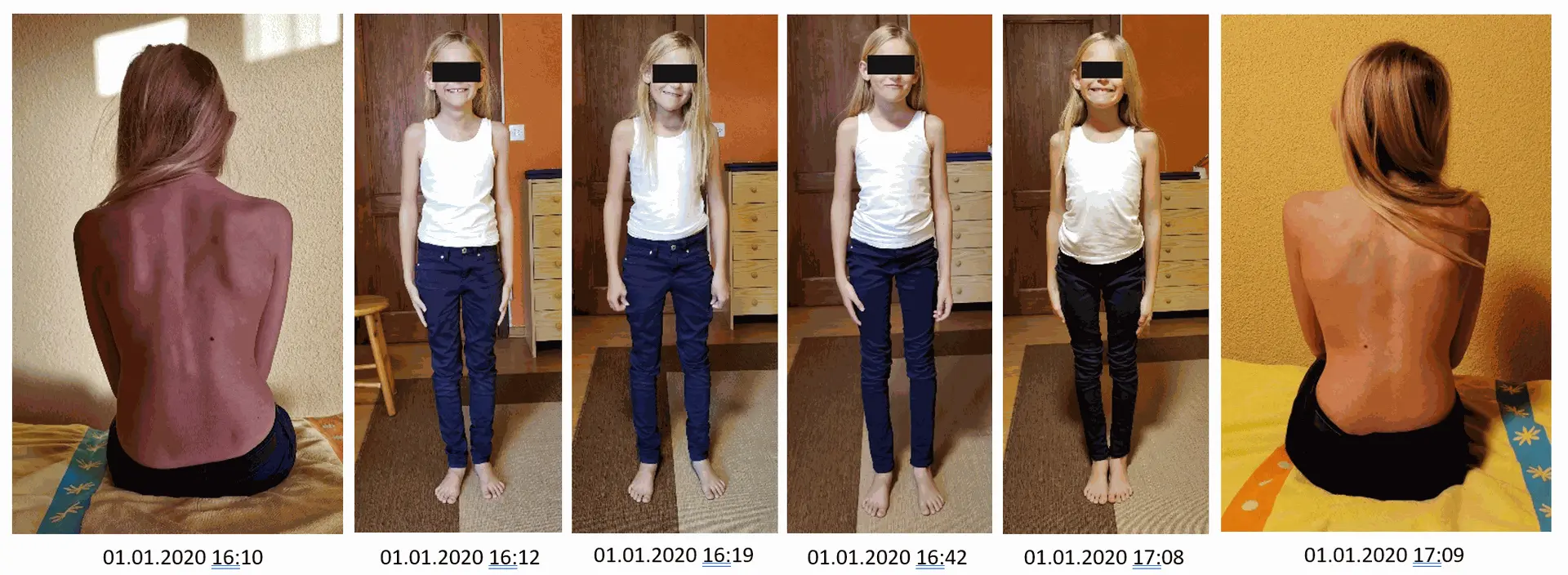
La Posture : L'Indicateur de Santé du Système.
La posture n'est pas simplement une position "se tenir droit". C'est l'acte moteur le plus complexe du corps humain, géré inconsciemment par le Système Nerveux Central (SNC).
En TNPI, nous considérons la posture comme un "Output" (une réponse). Si le corps se tord, s'affaisse ou se raidit, ce n'est pas un défaut mécanique, mais une stratégie de protection intelligente. C'est la meilleure solution que le cerveau a trouvée pour gérer des informations sensorielles contradictoires (Input erroné) ou une douleur cachée.
Analyser la posture ne sert pas à juger l'esthétique, mais à lire l'état du système de pilotage. Une posture dysfonctionnelle est la signature visible d'un "bug" invisible dans le traitement de l'information.
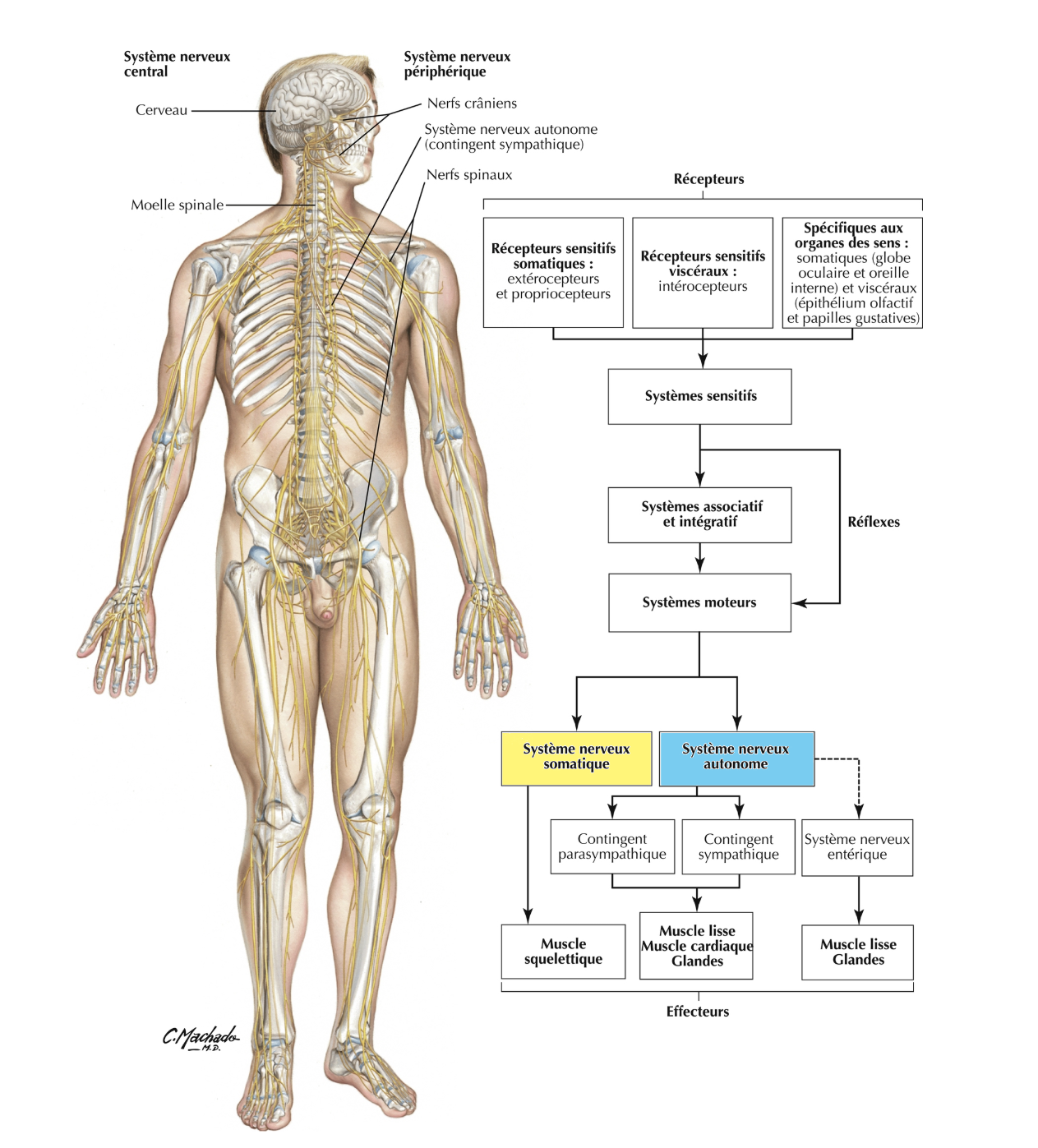
Fonctionnement du système Nerveux Central
Le Cerveau : Une Machine à Prédiction. Le rôle premier du Système Nerveux n'est pas de penser, mais de vous maintenir en vie. Pour cela, il fonctionne comme un radar permanent :
INPUT (L'Entrée) : Des millions de capteurs (Yeux, Oreille Interne, Peau, Pieds, Viscères) scannent l'environnement et l'intérieur du corps.
PROCESSING (Le Traitement) : Le cerveau compare ces données à sa "carte interne" (Schéma Corporel). Si les informations concordent, il se sent en sécurité. Si elles sont floues ou contradictoires (Conflit Sensoriel), il perçoit un danger.
OUTPUT (La Sortie) : En cas de danger perçu, le cerveau verrouille la structure (raideur, douleur, inflammation) pour protéger les organes vitaux.
La TNPI n'essaie pas de forcer le corps (Output). Elle corrige les informations erronées (Input) pour que le cerveau lève lui-même ses verrous de protection.
Comment se déroule une Séance
Le Protocole Clinique TNPI. Une consultation suit une méthodologie rigoureuse en 4 temps, visant à identifier la cause primaire du déséquilibre :
L'Anamnèse Neuro-Fonctionnelle : Nous retraçons l'historique des traumatismes (physiques et émotionnels) pour comprendre la "charge allostatique" du patient.
Le Bilan des Capteurs (Les Entrées) : À l'aide de tests neurologiques spécifiques, nous vérifions l'intégrité des capteurs posturaux majeurs :
Oculomotricité & Convergence (L'Œil)
Système Vestibulaire (L'Oreille Interne)
Appuis Podaux & Proprioception (Le Pied)
L'Analyse Structurelle & Viscérale (Le Terrain) : Nous testons la mobilité de la colonne vertébrale, la tension des chaînes fasciales et la liberté des organes pour localiser les zones de restriction (Biotenségrité).
La Correction Intégrative : Le traitement est multimodal. Il peut combiner des manipulations fasciales douces, des stimulations sensorielles précises (fréquences, mouvements oculaires) et une régulation du système nerveux autonome.
L'Objectif : Rendre au patient sa capacité d'adaptation. Nous ne soignons pas une maladie, nous optimisons le terrain pour que la guérison advienne.